A GENESYS robotics prototype is in pilot. Inspection robots and drones collect readings on a schedule, and every finding reaches AMS & LES with its photo, value and location. The aim is fewer truck rolls and earlier failure detection.
A four-legged inspection robot walking its round past the control building at golden hour.
1On today's roundThermal camera and microphone
2Yard gateChecked and shut
Inspection robot, stop 2 of 7LiveThermalHotSoundNormalWork orderSent to the crew
The problem
Some of the most important work in a substation is simply looking and listening.
It is routine, it is repeated across every site, and it is done next to live equipment. Often it means a long drive up a rough track to read one gauge. That is exactly the work a robot can take on.
123
Main substationWhere the trip starts
Steep trackFour-wheel drive only
Tower on the hillTo read one gauge
1Main substationWhere the trip starts
2Steep trackFour-wheel drive only
3Tower on the hillTo read one gauge
Long trips for routine readings
Crews drive out to read gauges and look at equipment that, most days, has not changed.
Gaps between visits
A hot joint or a worn insulator can develop for weeks between manual rounds.
Close to live equipment
Looking and listening often means standing in front of energised switchgear.
How it works
Robots take the rounds. Findings go to the people who act.
The prototype covers five jobs. Each reading lands on the asset it belongs to, and anything unusual becomes a work order with its evidence.
01
Substation inspection robots
Scheduled rounds through the yard and control building: gauges, oil levels, breaker positions, cabinet doors.
02
Drones for line inspection
Overhead lines and towers inspected from the air, span by span, with the location on every image.
03
Thermal and acoustic sensing
Hot joints and partial discharge picked up before they trip a feeder.
04
Remote switching
Switching operated from the control room through SCADA, with no one standing at the cubicle.
05
Findings become work orders
Each finding opens a work order in AMS & LES, with the evidence attached and the asset's health updated.
Check the top connectionsSubstation crew 2Main substation, bay threeDue this weekPhoto and reading attached
04 · SCADA
The control room sees it too
High priorityHot connectionHigh priority · photo attached
The operator decides on load with the same photo the crew will see.
Found on the round. Fixed on the next visit.
Try it · one inspection round
One round, followed stop by stop.
The robot enters the yard, stops at each asset on its route and returns to its dock. Every reading lands on the asset it belongs to. Run the round to follow it.
Main substation · today's roundInteractive
Busbar · 110 kV Control building Transformer, bay three Second transformer Dock Gate Running hot Unusual sound 1 2 3 4 5 6 7
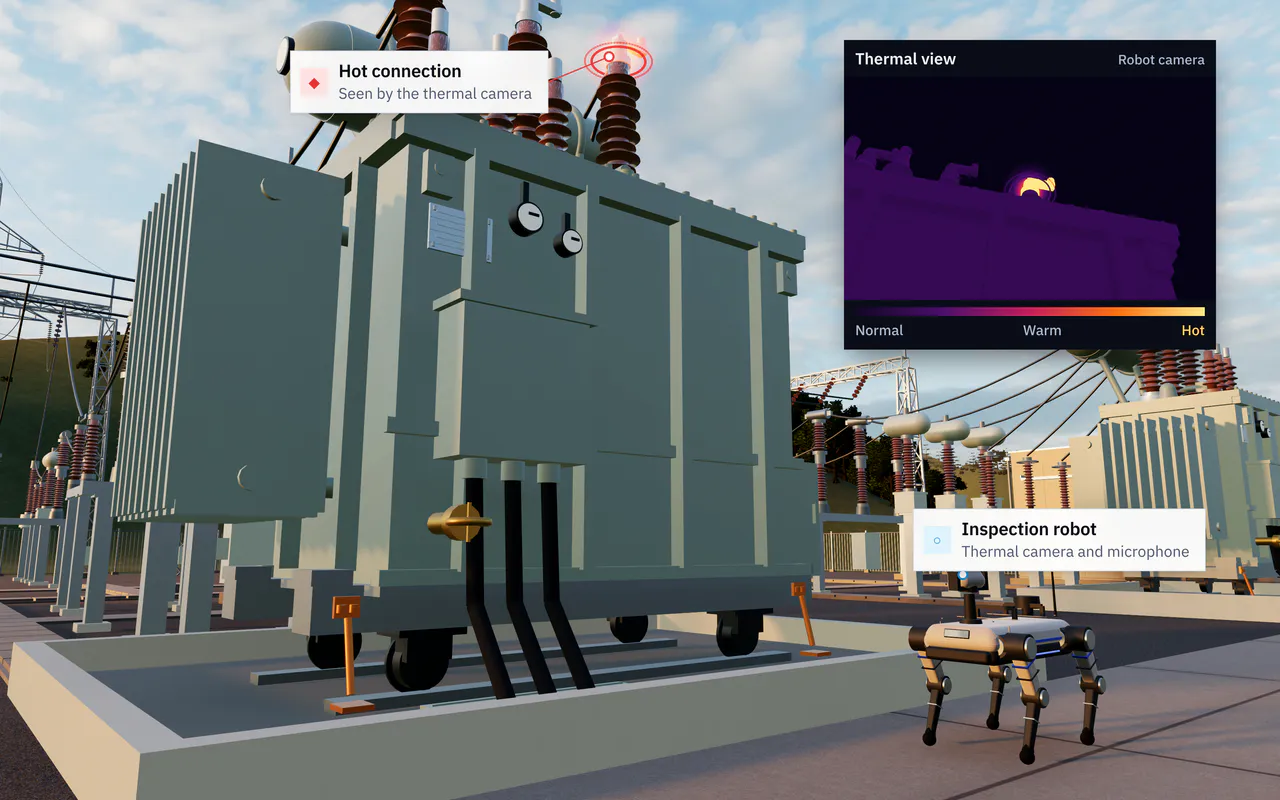
The camera sees the top connection of one bushing running far hotter than its neighbours. The reading is saved with the photo, the asset and the robot's position.
Transformer, bay threeThermal photoHot
Unusual soundBreaker in bay threeInspection robot · acoustic
Normal humUnusual sound
An ear for what does not belong
Between the steady hum of the yard, the microphone picks up short, sharp bursts near a breaker: a pattern that can mean partial discharge. It goes on watch, and the next rounds listen for it again.
Breaker, bay threeSound recordingOn watch
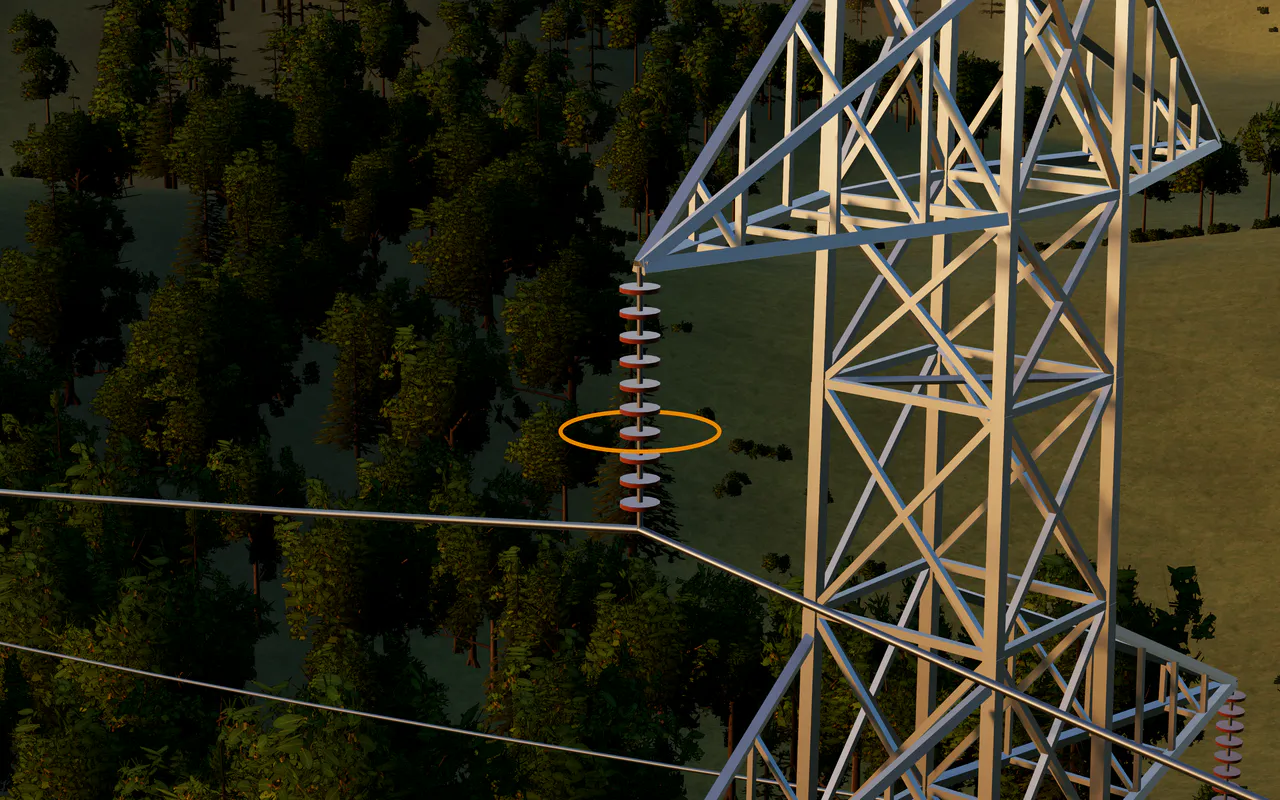
Worn insulatorTower on the hillDrone · hill line
Span checkedNeeds a look
Every tower, every span, and where each picture was taken
The drone flies the line corridor and photographs each tower from the side, so insulators and fittings are seen at a useful angle. Every image knows its line, span and tower, so a finding opens a work order for exactly the right place.
Hill lineTower on the hillWorn insulator
Field work
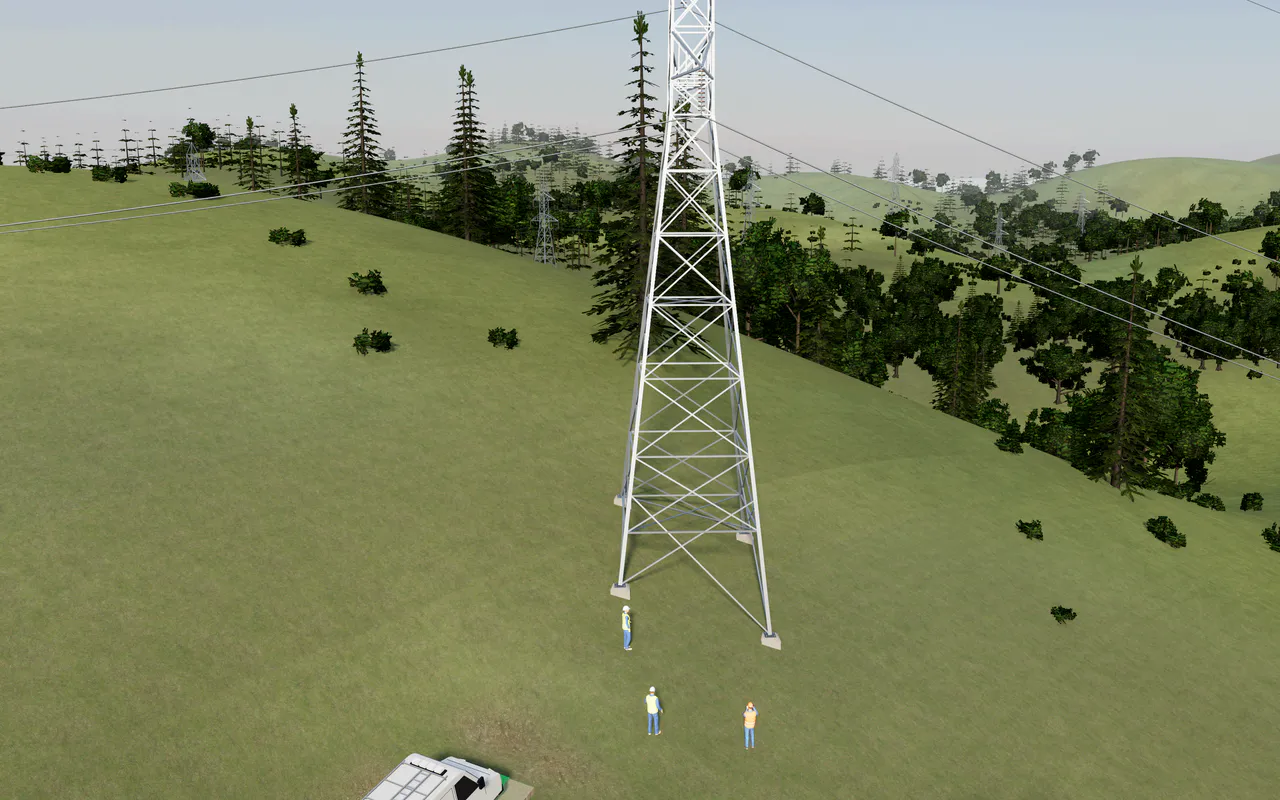
Out on the line, the crew sees the same picture.
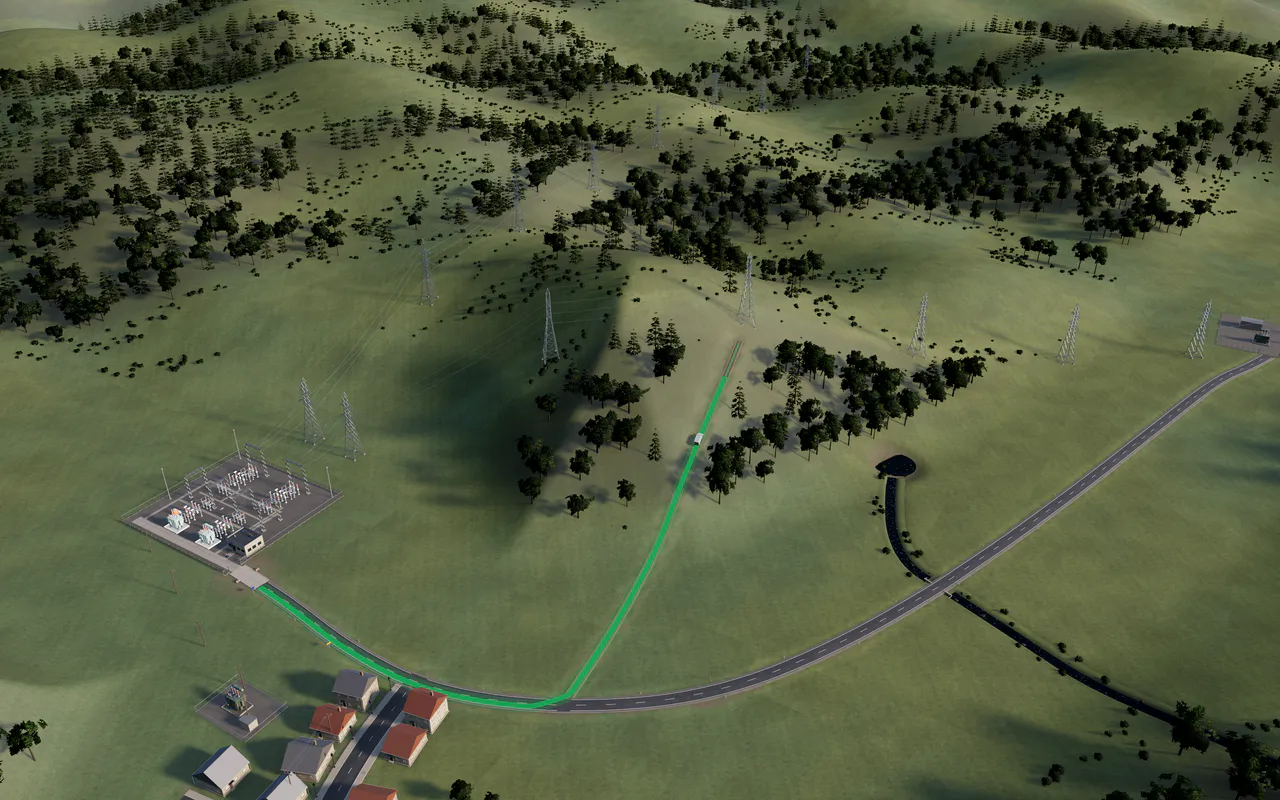
A crew that arrives with the wrong vehicle, or without knowing the ground, loses the day. The work order carries the trip as well as the task: the route, what the ground is like, and a short checklist to close the job on site.
Route on the work order
Main substation Valley substation Hill line Culvert Trees growing close Depart the depot Access road, gravel Steep trackfour-wheel drive At the tower on the hill 1234
Crew route
Steep track
Hill line
Trees growing close
Stream
Forest
Work order · line crewTrees growing close to the hill line
Line crew 1, two peopleSpan by the hill towerFour-wheel-drive vehiclePermit to work active
The trip, stop by stop
1Depart the depotFour-wheel drive, saw and permit on board
2Access roadGravel, along the valley floor to the track
3Steep trackFour-wheel drive only, in low gear
4At the towerClear the span, attach a photo, close the job
Closed on site, photo attached
The right crew, the right kit, the first time.
What the pilot is for
Fewer trips. Earlier warnings. More distance.
Fewer truck rolls
Routine readings come from the robot's round. Crews drive out when a finding needs them.
Earlier failure detection
Rounds run more often than manual inspections, so trends show up sooner.
Distance from live equipment
Inspection and switching happen without a person in front of energised switchgear.
What the pilot measures, and what it does not claim yet
The prototype is used to check that rounds are repeatable, that readings land on the right asset and that findings reach the right person in time. It is not yet used to make claims about cost or failure rates; those need a longer observation period on live sites.
Some of the most important work in a substation is simply looking and listening. In the GENESYS pilot, a robot walks the yard on its own, with a thermal camera and an ear for unusual sounds.
Out on the line, a drone checks every tower and every span, and knows exactly where each picture was taken. When they find something, a hot connection or a worn insulator, it becomes a work order, with the evidence attached.
GENESYS robotics. Fewer trips. Earlier warnings.
Robotics beyond pilot
Robot and drone makers: end your data in a work order.
JUMPHASH is looking for robotics partners and utility sites for the next stage of the pilot.


 Worn insulatorTower on the hill