

On this page
A picture is not a finding
An inspection robot can collect hundreds of images and readings on one round through a substation yard. Most of them say the same thing: the oil level is where it was, the breaker is closed, the cabinet door is shut. A crew does not need to see those readings. It needs to know which few of them changed, on which asset, and by how much.
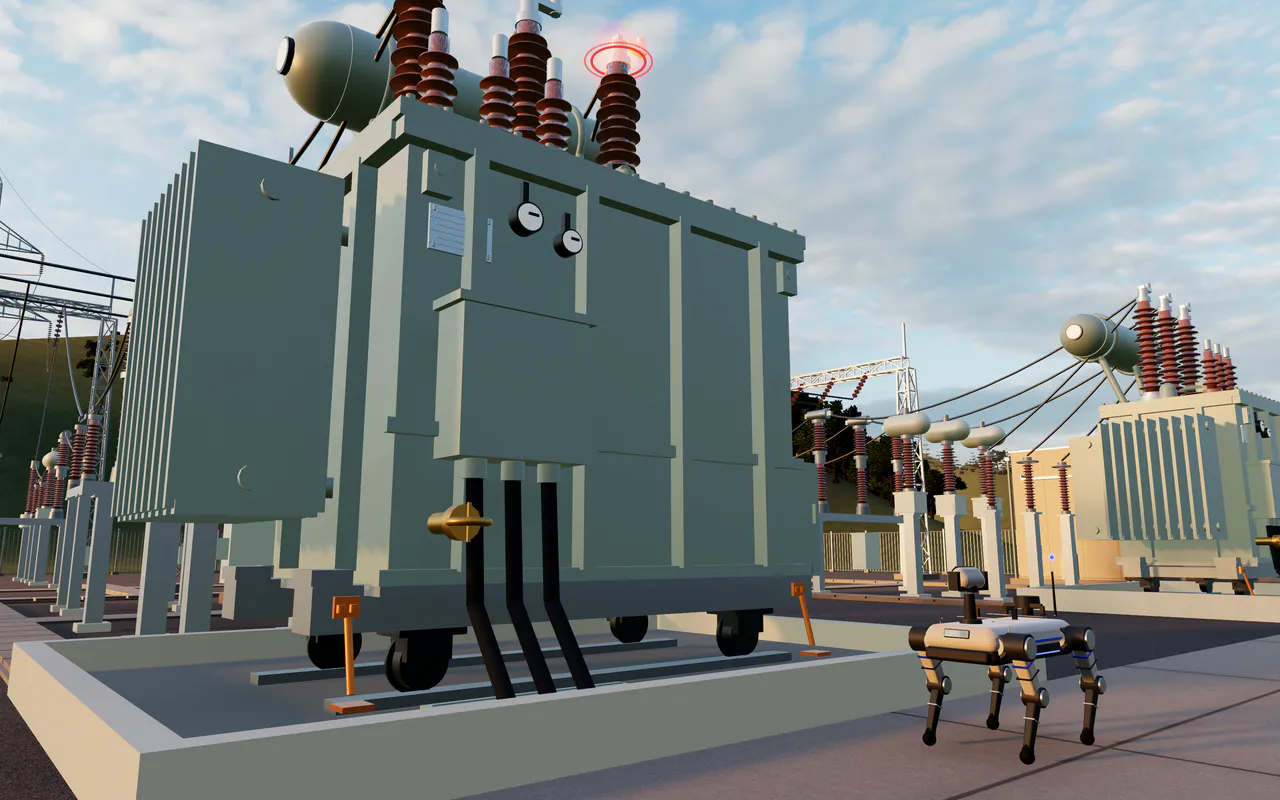
The GENESYS robotics pilot treats every reading as a record with four parts: the asset it belongs to, the quantity measured, the value with its unit, and the time and position of the robot when it was taken. A thermal image of a transformer becomes a record: the transformer in bay three, hot-spot temperature, 78.4 °C, 09:16, the second stop of today's round. The image is attached as evidence, not as the message.
Thresholds belong to the asset, not to the robot
A robot does not know that 78 °C is high for one transformer and normal for another. That knowledge sits in the asset record in AMS & LES: the nameplate rating, the cooling stage, the last oil test and the limits the utility has set. The robot reports the value; AMS & LES compares it with the limits for that asset and decides whether it is a finding.
This keeps the rules in one place. When a utility changes a limit, it changes it once, in the record, and every round after that uses it.
Every finding has an owner
A finding that nobody owns is a finding that waits. In GENESYS a finding opens a work order with the asset, the reading, the evidence and the threshold it crossed. The work order has a crew and a due date. The asset's health index updates at the same time, so planners see the change on the fleet view without opening the work order.
Some findings also belong in the control room. A hot joint on a loaded transformer is a maintenance item and an operating risk. GENESYS SCADA receives it as an alarm with the robot's evidence attached, so the operator who decides whether to shed load can see the same image the crew will see.
- Asset, quantity, value and position on every reading
- Limits come from the asset record in AMS & LES
- Findings open work orders with the evidence attached
- Operating risks reach SCADA as alarms with the same evidence
What the pilot measures
The pilot is a prototype. It is used to check that rounds are repeatable, that readings land on the right asset, and that findings reach the right person in time. It is not yet used to make claims about cost or failure rates; those need a longer observation period on live sites.
The intended outcome is plain: fewer truck rolls for routine readings, earlier detection of trends, and more distance between people and energised equipment.
More on this: the robotics pilot.