


 DEVELOPED BY In development
 Alarms in order. Switching on record.
GENESYS SCADA shows what is happening in a substation now and lets operators act on it: ISA-101 process views, alarms handled to ISA-18.2, and switching with interlock checks and a journal of every action.
- The alarm that mattersTransformer running hot
- Switching stepChecked and confirmed
- Live pictureFrom the robot in the yard
- The alarm that mattersTransformer running hot
- Switching stepChecked and confirmed
- Live pictureFrom the robot in the yard
- Winding temperature high, Urgent priorityP1
- Gas pressure low, High priorityP2
- Cooling fans, group two, failed, High priorityP2
When something goes wrong, operators need clarity, not noise.
Night shift in the control room: signals keep arriving, minute after minute. The job is to find the one that matters and act on it safely.
The alarm flood
When a feeder trips, dozens of alarms arrive in a minute. Each one is true; together they hide the one that needs action first.
Colour everywhere
Busy, colourful displays make normal look urgent, so the abnormal state is the hardest thing on the screen to see.
Switching on paper
Orders, interlock checks and the log live in different places, and the crew on site sees a different picture from the control room.
Supervisory control and data acquisition, made calm.
Process views, alarms and remote control for substations and plants.
Process views
ISA-101 displays: grey by default, colour only for abnormal states.
Alarm management
ISA-18.2 priorities, shelving, suppression and an acknowledgement journal.
Remote control
Switching orders with interlock checks and a second confirmation.
Field devices
RTU, PLC and gateway health, with comms quality per link.
Event timeline
Every state change and operator action, in order, with its source.
Every switching step, checked and on record.
Open the breaker on the hill line at the sample substation. The order runs through the interlock checks, needs a second confirmation, and writes each step to the journal as it happens, while the load moves across and the hospital stays supplied.
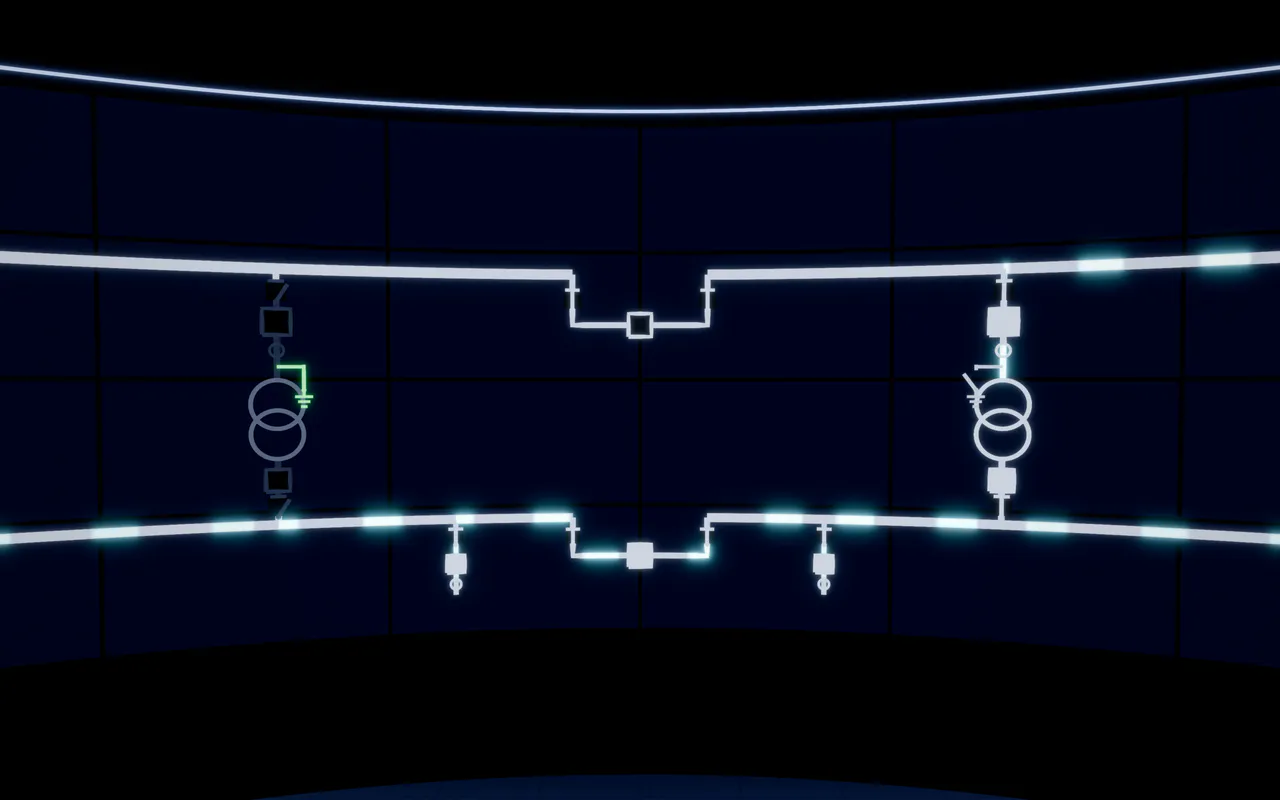
- Earthing switchChecked open
- Bus tieTakes the load across
- Hospital feederStays supplied
- Earthing switchChecked open
- Bus tieTakes the load across
- Hospital feederStays supplied
Open the breaker on the hill line
- Earthing switch is openNot checkedPassed
- No one is working on the hill lineNot checkedPassed
- Load can move to the valley lineNot checkedPassed
- Operator on shift is authorisedNot checkedPassed
The hill line breaker is selected. Start with the interlock checks.
Every step checked, confirmed twice and on record.
- Every step will be written here, with the operator and the time.
From an alarm flood to the one that matters.
A minute after a feeder trips, dozens of alarms arrive. GENESYS SCADA sorts them to ISA-18.2, so the operator starts with the few that need action.
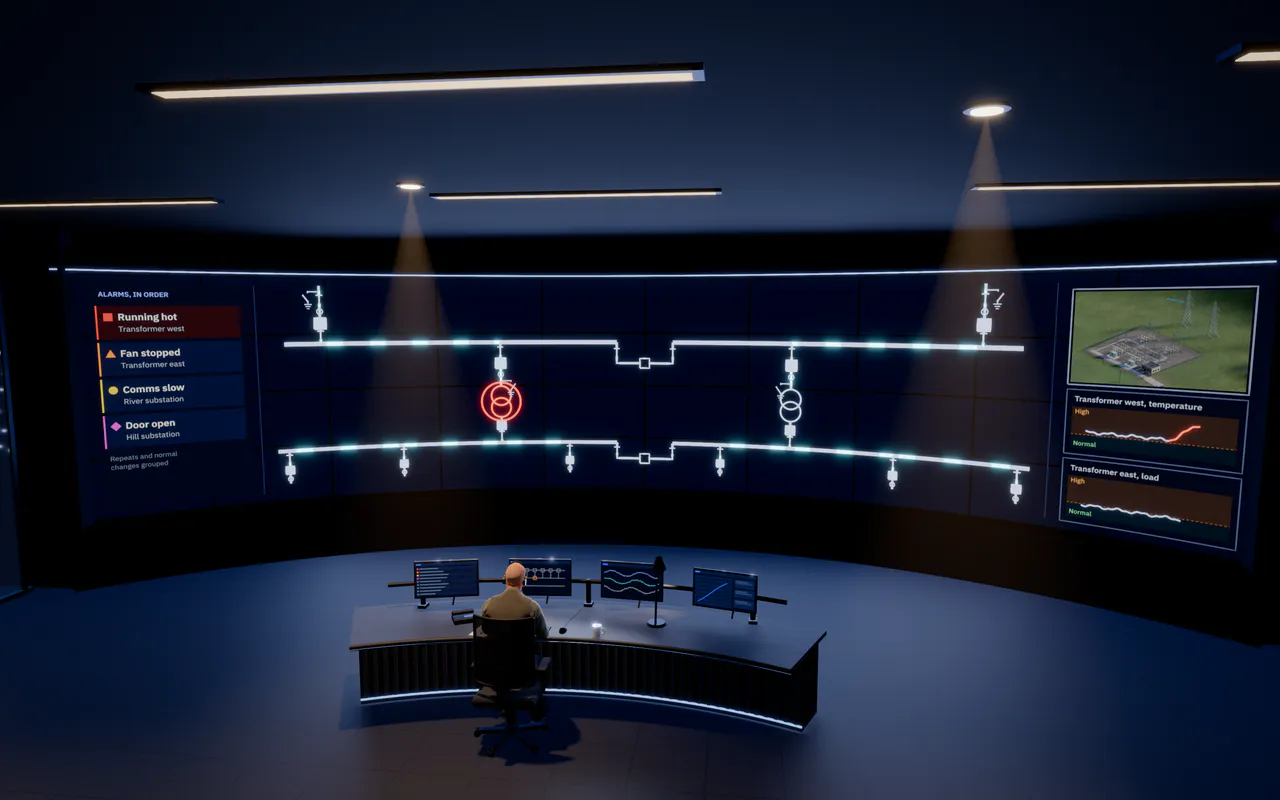
- Alarm listThe few that matter, first
- Operator on shiftSame picture as the crew
- Alarm listThe few that matter, first
- Operator on shiftSame picture as the crew
- Feeder breaker tripped
- Bus voltage lost
- Bay four voltage lost
- Bay five voltage lost
- Remote unit link lost
- Cooling fans one stopped
- Protection operated
- Bay six voltage lost
- Winding temperature high
- Tap changer blocked
- Gateway link degraded
- Battery charger fault
- Gas pressure low
- Bay seven voltage lost
- Cooling fans two failed
- North feeder dead
- River feeder dead
- Current transformer alarm
- Bay eight voltage lost
- Line relay started
- Kiosk door open
- Heater fault
- Town feeder dead
- Controller watchdog
- Backup power on battery
- Bay nine voltage lost
- Pump stopped
- Oil level low
- School feeder dead
- Fire panel fault
- Bay ten voltage lost
- Link retry
- Bay eleven voltage lost
- Clock sync lost
- Farm feeder dead
- Bay twelve voltage lost
Each one is true. Together they hide the one that needs action.
- 1 Urgent priority Winding temperature highTransformer, bay three Reduce load now
- 2 High priority Gas pressure lowHill line breaker Send a crew today
- 2 High priority Cooling fans two failedTransformer, bay three Check before peak load
The other 33 go to the event journal, shelved or grouped under the trip that caused them.
One alarm that matters, first.
Try it: four priorities, each with a shape
Priority is never carried by colour alone, and an unacknowledged alarm blinks once a second until someone owns it. Acknowledge the alarms below.
- 1P1 · UrgentAct now: risk to people, plant or supply.
- 2P2 · HighAct soon: the situation will get worse.
- 3P3 · MediumAct within the shift.
- 4P4 · LowNote and plan: no immediate consequence.
Acknowledge an alarm: it stops blinking and the journal records who and when.
- Acknowledgements will appear here.
Built on the standards control rooms already use.
ISA-101 process views
Displays stay grey while everything is normal. Colour appears only for abnormal states, so it draws the eye to the right place.
ISA-18.2 alarm management
An alarm is something that needs an operator's response; everything else is an event in the journal. Shelving and suppression are on the record.
Know when the data stops, not just when it changes.
The remote units, bay controllers, gateways and sensors sit next to the process data, with comms quality on every link. A lost monitor shows as lost, and the values that depend on it are marked stale.
-
-
-
- Gas pressure Live5.9bar
-
-
- Winding temperature Live71°C
- Gas level Stale112ppmLast value at 13:47, not carried forward.
-
-
-
- Strong link
- Fair link
- Link lost
- Stale value
A lost feed shows as lost, never as a flat line.
Every state change and action, in order.
Alarms, operator actions and system changes share one clock in the journal, each with its source, so the shift handover and the incident review read the same record.
- 14:02:11Winding temperature high · urgent alarm raisedTransformer, bay three
- 14:02:40Alarm acknowledgedOperator on shift
- 14:03:05Transformer health 62 → 58 · now on watchAMS & LES
- 14:05:18Load transfer prepared for bay threeOperator on shift
- 14:06:02Breaker opened · confirmed by two operatorsTransformer breaker
- 14:11:47Temperature back to normalTransformer, bay three
GENESYS SCADA, in brief
What matters first, with the evidence beside it, and switching on record.
The film could not load here. Open the MP4 file or read the transcript.
See GENESYS SCADA on a substation you run.
GENE has integrated SCADA for utilities and industrial plants for more than ten years. Talk to GENE and JUMPHASH about a pilot.